Person meditating cross-legged on cushion in Japanese-style room

The Integration of Zazen and Ritual: Reconsidering Dōgen’s “Just Sitting”

Introduction

A common interpretation of the Zen master Dōgen (1200–1253) is that he advocated a minimalist form of Buddhism centered exclusively on shikantaza, or “just sitting.” This reading often relies on a famous passage in the Bendōwa that appears to dismiss traditional Buddhist rituals. However, contemporary scholarship—especially the work of T. Griffith Foulk, Carl Bielefeldt, and William Bodiford—has challenged this anti-ritual interpretation. When Dōgen’s broader corpus is considered, especially the Eihei Shingi and Tenzo Kyōkun, it becomes clear that Dōgen did not merely tolerate ritual as a secondary feature of monastic life. He positively taught ritual, prescribed it in detail, and treated it as an essential component of Buddhist training. Rather than functioning as optional devotional exercises, chanting, bowing, offerings, liturgy, communal etiquette, and monastic forms constitute embodied expressions of what Dōgen understood as the unity of practice and realization (shushō ittō). Properly understood, zazen and ritual are not competing approaches but inseparable dimensions of a single Buddhist path.

The “Just Sitting” Directives

The primary evidence for the minimalist interpretation is found in Dōgen’s early writings, most notably the Bendōwa (1231). In this text, Dōgen writes: “You need not burn incense, make prostrations, recite the Buddha’s name, practice repentance, or read sutras. Just wholeheartedly sit, and thus drop off body and mind” (Dōgen, 2010, p. 11). Similarly, in the meditation manual Fukanzazengi (1227), he emphasizes the self-sufficiency of zazen: “The zazen I speak of is not learning meditation. It is simply the dharma gate of joyful ease, the practice-realization of complete enlightenment” (Dōgen, 2002, p. 30). Read in isolation, such passages can appear to reject ritual and devotional forms in favor of seated meditation alone. Yet that conclusion becomes difficult to maintain when these statements are read alongside Dōgen’s later monastic regulations and ritual instructions.

Ritual as Essential Practice in the Eihei Shingi

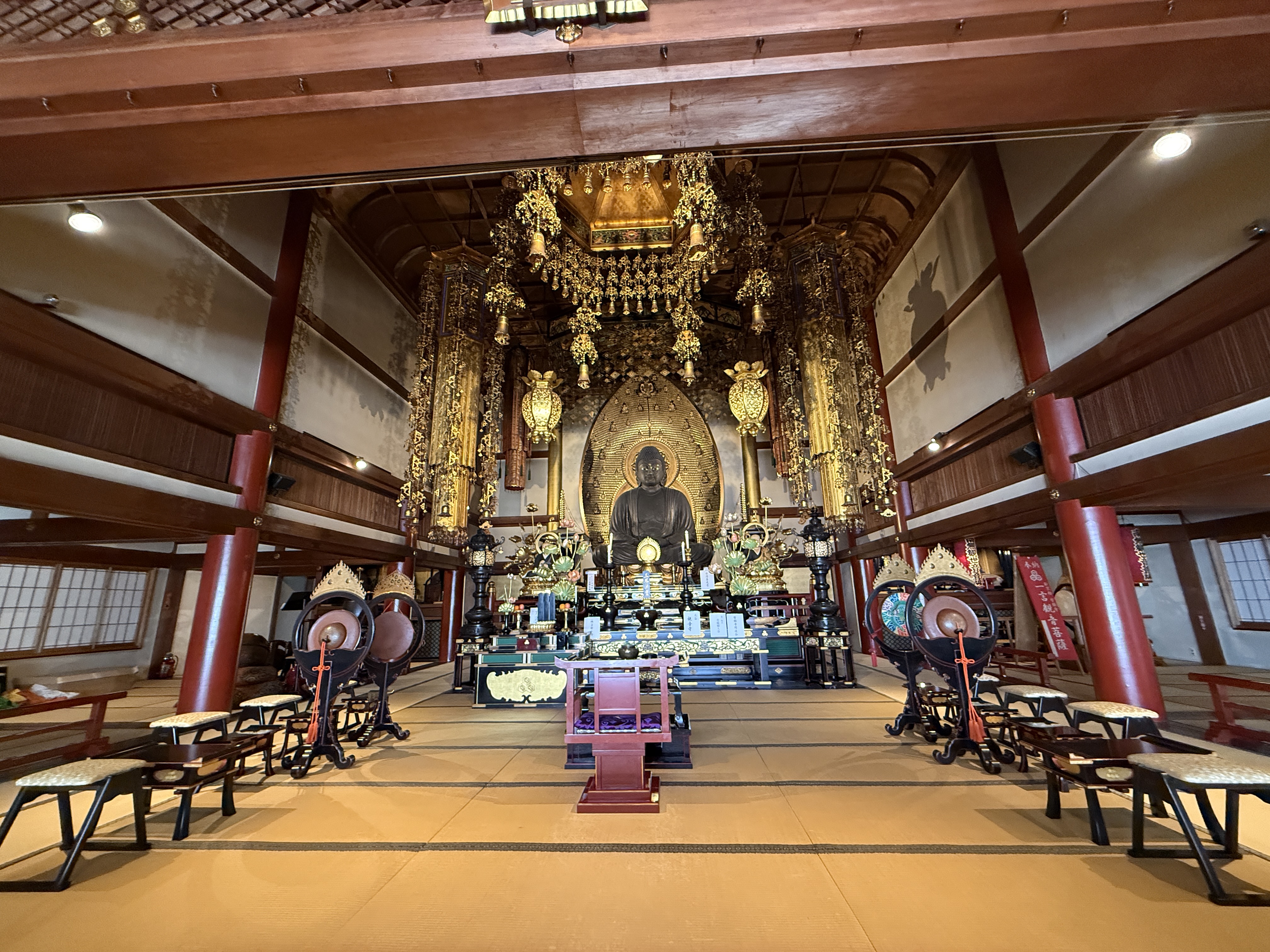
Dōgen’s own institutional activity as the founder of Eihei-ji contradicts any literal anti-ritual reading of the Bendōwa passage. In the Eihei Shingi, his comprehensive monastic code, Dōgen gives detailed instructions governing ceremonies, offerings, prostrations, chanting, monastic etiquette, and communal observances. As T. Griffith Foulk (2004) observes, “The specific rituals that seem to be disavowed in the Bendōwa passage are all prescribed for Zen monks, often in great detail, in Dōgen’s other writings. In Kuyo shobutsu, Dōgen recommends the practice of offering incense and making worshipful prostrations before Buddha images… In Chiji shingi he stipulates that the [monks] should burn incense and make prostrations (shoko raihai) and recite the buddhas’ names” (p. 239). Foulk’s observation demonstrates that the Bendōwa passage cannot reasonably be interpreted as Dōgen’s rejection of ritual. Such an interpretation is contradicted by Dōgen’s own later writings, in which he repeatedly mandates incense offerings, prostrations, chanting, formal ceremonies, and communal liturgy. The apparent contradiction is resolved once the Bendōwa is read as rejecting ritual performed as a substitute for awakening rather than ritual understood as the embodied enactment of awakening. In this light, the ritual world of Eihei-ji was not marginal to Dōgen’s teaching but one of its clearest historical realizations.

Practice Beyond the Cushion: The Tenzo Kyōkun

Dōgen’s view of ritual becomes even clearer in Tenzo Kyōkun (Instructions for the Cook, 1237), where he expands the meaning of practice beyond formal meditation to include every movement of daily life. He writes, “Handle even a single leaf of green in such a way that it manifests the body of the Buddha” (Dōgen, 1996, p. 37). He further warns against dividing activities into “spiritual” and “mundane”: “Do not think that because this is ordinary work it is not the Buddha Dharma. … You should transform the self in the midst of working with the ladle” (Dōgen, 1996, p. 38). These instructions show that for Dōgen, awakened practice is not confined to the meditation hall. Cooking, serving, cleaning, and attending to communal responsibilities are all concrete forms of Buddhist realization. By the same logic, prostration, chanting, and ceremonial observance are not secondary additions to zazen. They are equally modes through which the practitioner enacts the Buddha Way with the body.

Embodied Practice in The Essential Dogen

This embodied understanding of practice is also illuminated in Tanahashi and Levitt’s presentation of Dōgen. They write that bowing is an act through which one expresses respect for the Buddha, the Dharma, the Sangha, and the practice place itself, thereby sanctifying the space of training (Tanahashi & Levitt, 2013, p. 16). They further emphasize that bowing is not merely symbolic but a full expression of practice in bodily form: “To bow all the way to the floor and to bow standing are awesome presence in motion and stillness” (Tanahashi & Levitt, 2013, p. 17). Read in this way, bowing is not separate from zazen but another mode in which Dōgen’s understanding of practice-realization becomes visible. The body in prostration and the body in seated meditation both enact the same awakened discipline, differing in form but not in underlying significance. Tanahashi and Levitt also broaden Dōgen’s understanding of practice beyond the meditation hall, emphasizing that “mindfulness and a respectful heart in each moment are applied equally in meditation and other daily activities including work, interaction with others, and cleansing one’s body” (Tanahashi & Levitt, 2013, p. 19). They explain that this way of living allows practitioners to “clearly see, understand, and value what is right before us as none other than the wholeness of life itself” (p. 19). In this framing, even ordinary objects and actions participate in awakening: “even our eating bowls are the body and mind of buddha ancestors” (p. 19). Rather than treating ritual and daily labor as secondary to zazen, this interpretation presents them as part of the same continuous field of practice-realization.

The Continuing Sōtō Understanding of Ritual and Everyday Practice

Modern Sōtō teachers have continued to interpret Dōgen’s teaching as an integration of zazen, ritual, and everyday activity rather than as an exclusive emphasis on seated meditation alone. Their writings reinforce the understanding that ritual functions not as an alternative to awakening but as one of its indispensable embodied expressions. Dainin Katagiri Roshi consistently taught that Zen practice must be lived through the body rather than understood merely as an intellectual doctrine. In Returning to Silence, he explains that authentic Zen practice is realized in the activities of everyday life, where ordinary actions become expressions of Buddha-nature (Katagiri, 1988). Within this framework, bowing, chanting, ceremonial practice, work, and daily responsibilities are not viewed as religious ornamentation but as opportunities to embody the Buddha Way. This interpretation closely parallels Dōgen’s insistence that cooking, cleaning, eating, and communal responsibilities are themselves forms of practice-realization. Kosho Uchiyama Roshi offers a complementary perspective. As one of the most influential twentieth-century Sōtō teachers, Uchiyama strongly emphasized zazen as the indispensable heart of Zen practice. Following his teacher Kōdō Sawaki, he described zazen as “good for nothing,” meaning that it is practiced without striving for personal gain or attaining special experiences (Uchiyama et al., 2004). Yet Uchiyama did not reject ritual or everyday forms of practice. Rather, he understood careful attention to ordinary activities as inseparable from zazen itself. His teaching demonstrates that even among teachers who strongly emphasize “just sitting,” the realization of Zen naturally extends into daily conduct, relationships, work, and mindful care for one’s environment.

What Scholars Say

Scholars increasingly argue that the tension between “just sitting” and ritual is resolved once Dōgen’s doctrine of practice-realization is taken seriously. Carl Bielefeldt (2004) argues that Dōgen’s famous statements about “just sitting” should not be interpreted as abolishing traditional Buddhist practices; rather, zazen itself is the supreme ritual and the rest of monastic life extends the sacred space of the meditation hall (p. 205). This reading helps clarify why Dōgen could elevate zazen without dismissing other practices. Zazen is central, but it does not stand apart from monastic forms. Instead, ritual, etiquette, chanting, bowing, and work all become extensions of the same awakened discipline. Shohaku Okumura (2012) similarly explains that communal forms protect the practitioner from turning Zen into a private, ego-centered project: “If we only practice zazen and ignore the forms of the sangha, we easily fall into the trap of ‘my practice’ or ‘my enlightenment.’ Ritual and communal forms are the ways we drop the small self and move in harmony with others” (p. 84). Taken together, these scholars support the conclusion that Dōgen did not merely allow ritual to coexist with zazen. He taught ritual as essential because awakening, for him, must take concrete form in the body, in the monastery, and in the rhythms of communal life.

Conclusion

The evidence presented here suggests that ritual is not peripheral to Dōgen’s Buddhism but constitutive of it. Zazen remains the heart of practice, yet Dōgen consistently taught that awakening must be embodied through ritual, communal discipline, work, etiquette, and liturgy. The Eihei Shingi is therefore not an appendix to Dōgen’s teaching but one of its fullest expressions. To separate “just sitting” from the ritual life Dōgen established at Eihei-ji is to divide practices that Dōgen himself understood as inseparable manifestations of practice-realization. The strongest reading of the evidence is therefore not merely that Dōgen did not reject ritual, but that he actively taught it, institutionalized it, and regarded it as an essential part of Buddhist training.

References

Bielefeldt, C. (2004). Just sitting? Dōgen’s take on zazen, sutra reading, and other conventional Buddhist practices. In S. Heine & D. S. Wright (Eds.), The Zen canon: Understanding the classic texts (pp. 197–219). Oxford University Press.

Dōgen. (1996). Dōgen’s pure standards for the Zen community: A translation of Eihei Shingi (T. D. Leighton & S. Okumura, Trans.). State University of New York Press.

Dōgen. (2002). Fukanzazengi. In K. Tanahashi (Ed.), Moon in a dewdrop: Writings of Zen Master Dōgen. North Point Press.

Dōgen. (2010). Treasury of the true dharma eye: Zen essays by Dōgen (K. Tanahashi, Ed. & Trans.). Shambhala Publications.

Foulk, T. G. (2004). Dōgen. In R. E. Buswell Jr. (Ed.), Encyclopedia of Buddhism (Vol. 1, pp. 238–240). Macmillan Reference USA.

Katagiri, D. (1988). Returning to silence: Zen practice in daily life. Shambhala Publications.

Okumura, S. (2012). Living by vow: A practical introduction to eight essential Zen chants and texts. Wisdom Publications.

Tanahashi, K. (Ed.). (1985). Moon in a dewdrop: Writings of Zen Master Dōgen. North Point Press.

Tanahashi, K., & Levitt, P. (Eds. & Trans.). (2013). The essential Dogen: Writings of the great Zen master. Shambhala Publications.

Uchiyama, K., Wright, T., Warner, J., & Okumura, S. (2004). Opening the hand of thought: Foundations of Zen Buddhist practice (Rev. ed.). Wisdom Publications.


Transforming Anger Through Mindfulness and Compassion

I suspect most people have experienced anger. Most recognize it as an undesirable emotion. At least they used to. In the last few years it seems as if rage and anger are being encouraged as desirable qualities. Most of my life I was content not to act on anger. As I’ve gotten older, I have hopefully grown wiser. I have learned to think about anger when I feel it. I hope to understand it. Then, I work to let go of the anger as part of my practice.

In Buddhist teaching, anger is not treated as a moral failure. Instead, it is viewed as a mental state. This state can be understood, examined, and transformed. It is considered one of the three unwholesome roots. Greed and delusion are the others. These roots give rise to suffering for oneself and others.

"I vow to abstain from the harboring of hatred, malice, or ill will."

What is the nature of anger? Anger arises when experience clashes with expectation: when things do not go as hoped, desired, or believed to be “fair.” Buddhism frames this not as an external problem caused by others. Instead, it sees anger as an internal reaction shaped by attachment and misunderstanding. Anger is impermanent, conditioned, and dependent on causes. Because it is conditioned, it can change.

Zen master Eihei Dōgen emphasized careful attention to mind states as they arise. In Shōbōgenzō, he writes that practice requires intimate awareness of cause and effect. It includes those mental states that appear small or passing. Yet, they carry far-reaching consequences. Anger, when left unexamined, becomes one such cause with enduring effects. The effects can spread beyond the immediate moment and have far reaching impact that are unseen.

The Buddha consistently taught that anger harms the one who carries it most. It clouds perception, narrows judgment, and fuels actions that often lead to regret. The Dhammapada famously observes that hatred is never ended by hatred. It is only ended by non-hatred or compassion. This is an empirical claim grounded in human experience rather than moral exhortation.

A parallel teaching appears in Jewish scripture. In Deuteronomy 28:47–48, the text warns that when one serves out of distress and inner turmoil rather than clarity and purpose, the result is bondage rather than freedom. Rabbinic tradition interprets unchecked anger and hatred as forms of inner enslavement. A person is no longer acting freely. They are ruled by destructive emotions. Thus, the person is enslaved by anger.

Rather than suppressing anger or acting it out, Buddhism emphasizes that mindful awareness is the appropriate response. When anger arises, practitioners are encouraged to notice it directly: its physical sensations, emotional tone, and accompanying thoughts. Naming it, “anger is present,” creates a small but meaningful distance between the feeling and the self. This space allows wisdom to replace the reactive nature of anger.

Loving-kindness (metta) and compassion are presented as direct treatments for anger. Importantly, these practices begin with oneself. Recognizing one’s own suffering reduces the tendency to project blame outward. From this foundation, compassion can extend to others, including those who may have triggered the anger. This does not mean excusing harm; it means responding without hatred.

Buddhist teachings on anger are basically pragmatic. Anger is not condemned, but it is not indulged either. Dōgen taught that freedom lies in seeing clearly how suffering is created moment by moment and choosing not to perpetuate it. Jewish ethical teaching similarly holds that mastery over anger is essential to human dignity and moral freedom.

Across traditions, anger is understood not simply as an emotion, but as a condition that, if left unchecked, binds the individual. Awareness, discipline, and compassion are crucial tools. These tools help one return to freedom internally and ethically. They do so without denying the realities that provoke anger in the first place.

Some practice approaches may include:

  1. Pause and Sit with the Body
    When anger arises, stop before responding. Notice where it manifests physically—tightness in the jaw, heat in the chest, contraction in the abdomen. In Soto Zen, returning to the body anchors the mind and interrupts escalation. This is not analysis; it is direct observation.
  2. Name the State Precisely
  3. Silently acknowledge: “Anger is present.” Avoid narratives such as “I am angry because…” Naming the state without ownership creates space between awareness and reaction. This aligns with non-identification rather than suppression.
  4. Cultivate Loving-Kindness After Clarity Returns
    Once the feeling of anger has softened, extend simple wishes of well-being to yourself first. Then, if possible, extend them to others involved. This is a practice of repair, not excuse.
  5. Commit to Non-Transmission
    A practical vow: “I will not pass this anger on.” Even when anger is justified, one can choose not to perpetuate it through words or actions. This is freedom expressed in conduct.

I always remind myself to return to the breath and not the story. Allowing attention to rest on breathing as it is. I do not attempt to calm anger away. I simply stay with inhalation and exhalation until the intensity naturally shifts. In Soto Zen, stability precedes insight. The practice has been helpful to me.

In Soto Zen practice, freedom is not defined by the absence of anger. It is defined by the capacity to meet anger without being compelled by it. Dōgen taught that each moment of mind is a time of cause and effect. Even small, unexamined reactions can shape far-reaching consequences. When anger arises and is met with awareness, restraint, and compassion, the chain of suffering is interrupted rather than extended. This is not passivity or denial; it is disciplined clarity. Across Buddhist and other religious ethical traditions alike, mastery of anger is seen as a practice of dignity. It restores moral agency by allowing individuals to act from wisdom rather than impulse. It helps individuals choose freedom even when provoked.

I wrote this blog post. I was still considering whether to post it on Facebook by Luang Phor Jaran Thitathammo https://www.facebook.com/share/p/1Ah2QMPsXK/. This is a person I would like to share a cup of tea with. I would love to have a long conversation or maybe just sit together.


Uncaptured Light

In the midst of the tourists’ clamor,  
amid stalls of food and hurried feet  
the sacred still stands —  
silent, unmoving, ageless.
I entered as a idle woman walking, 
drawn by the voice of a single chant,  
wafting like incense into the cool morning.  
At Tokoyetushidu, at Seranji, at Yata Dera,  
and at Kashu Honnoji,  
the temples welcomed all who had ears to hear.
Some gazed only through the lens,  
forgetting no picture can frame  
the true breath of the sacred.  
The halls where no photograph is allowed —  
they hold their beauty deeper still,  
beyond what can be captured in two dimensions.
These precious shrines,  
hidden in plain sight,  
your stones remember each prayer,  
your gardens embrace each silent bow.
Let our hearts become the camera,  
our breath the ink,  
our soul the page.
Memories written in reverence  
outlast any image,  
for what is sacred  
cannot be taken —  
only received.
Thus I walk on,  
carrying within me  
the unseen light.

A Pilgrim’s Journey Through Kyoto’s Ancient Temples

Thus have I walked.

In the quiet morning, beneath the cover of Kyoto’s clouds,
I set my feet upon the stone path of the ancients.
Temples stood in stillness, watching centuries unfold.
And I, a loyal pilgrim, climbed the hill with breathless wonder.

At the gate of Kennin-ji, I bowed in silence.
The gardens spoke in stillness—gravel, blossoms, and stone.
In the Hall of Nenge-do, the law was not spoken—
Yet in every paint stroke, rising from the Buddha, the Dharma whispered.

Above the Buddha, two dragons rose,
coiling through clouds and space—
not with sound, but with spirit.
No scroll, no ink, no voice—only the heart receiving the heart.

Among flowers and stone,
In the hush of painted sky and weathered wood,
I too smiled,
Not for knowing,
But for being.

And though my hips ached and time weighed on my shoulders,
I was not the oldest in Kyoto.
The stones were older. The wind was wiser.
And yet, in that moment, I belonged.

So may the Dharma be carried—
not by word, but by presence;
not by voice, but by smile;
not by time, but by heart.

Gassho.


Interbeing: Connections and Compassion in Zen

I had a conversation with my teacher that was prompted by an AI discussion and then a question I asked AI in response to the discussion. Oddly, the response from the human, not the AI, left me thinking about relationships. In Soto Zen, we often speak of the importance of the teacher-student relationship. It is not merely a hierarchical connection or a formal structure—it is a living, mutual inquiry. The teacher serves not only as an authority in the conventional sense, but as a mirror and a companion on the path. Through this relationship, the student learns to see clearly, both inwardly and outwardly. Sometimes, seeing can be challenging.

But the significance of the relationship in Soto Zen extends beyond the zendo, beyond the Sangha, and beyond formal roles. Every interaction we have is a field of practice. Every person we meet offers a chance to express presence, compassion, and wisdom (something I sometimes feel I lack). We are not separate from one another; our lives are interpenetrated and moment by moment.

To care for a relationship with one’s teacher is to practice intimacy with truth. To care for relationships with others is to practice intimacy with life. Whether in silence or speech, in ease or difficulty, each relationship reveals the nature of interbeing. My teacher is a part of me, as are my friends and my colleagues, and even the random person I meet while listening to music.

To study the self is to forget the self. To forget the self is to be actualized by the ten thousand things. — Dogen Zeng

Relationships are part of those ten thousand things. We do not lose ourselves by attending to them with care and honesty. We find our true nature reflected in the eyes of others. So, let us not seek enlightenment apart from our relationships. Let us meet one another fully, with sincerity, humility, and compassion. In that meeting, the Way unfolds.

I hope I honor my teacher, my mentors, my colleagues, and my Sangha.


Embracing Stillness: New Year Reflections

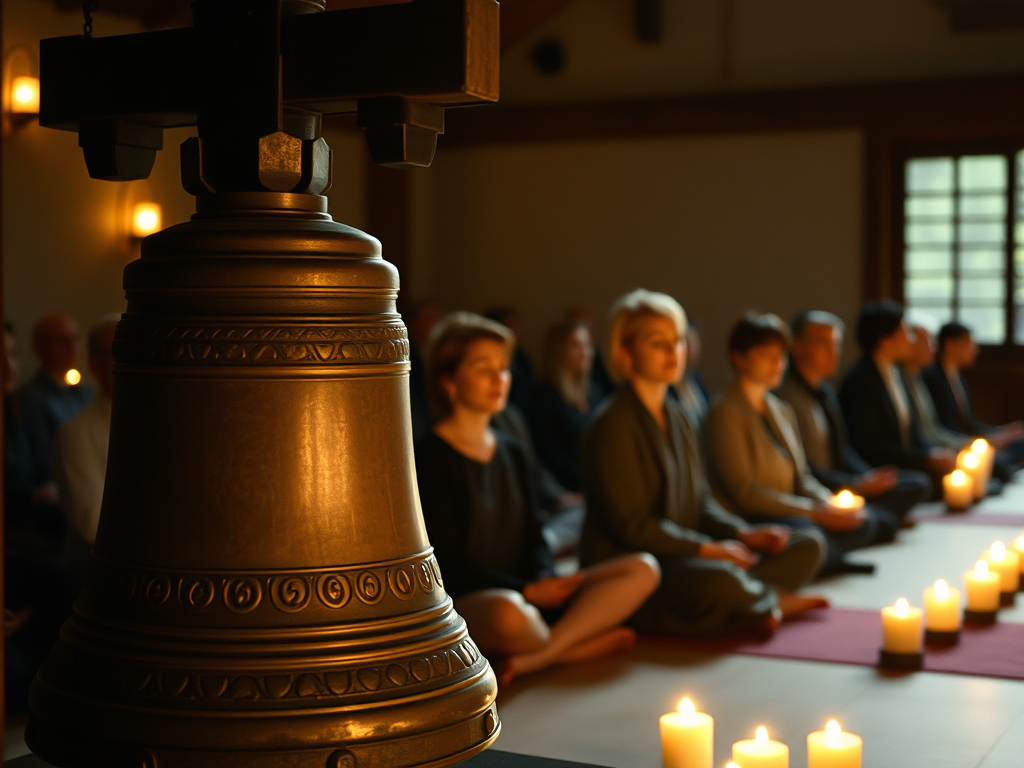
As the clock struck midnight, I sat silently at Upaya Zen Center, immersed in zazen. There was no countdown, no fireworks, just the gentle rhythm of my breath and the profound stillness of sitting together in the community. As 2024 ends, I shared in the tradition called the Bells of New Year’s Eve. The bells mark the transition into the new year with the ringing of the temple bell 108 times. Each bell is rung and allowed to resonate until the sound fades away. In Buddhist teachings, the number 108 represents the delusions and desires that cloud our minds and lead to suffering. Each chime of the bell is a symbolic act of releasing these burdens, cleansing the heart and mind, and preparing to greet the new year with clarity and compassion.

The sound of the bell oddly adds to the stillness of the night, creating a space for reflection and mindfulness. As the final bell echoes into the new year, it’s a reminder of impermanence and renewal—an invitation to step into the future with a fresh perspective, an open heart, and a commitment to peace. Whether heard in person, online, or in spirit, the Bells of New Year’s Eve offer a moment of profound stillness and hope for the year to come. It gives us a moment to remember those who passed this year.

Remembering a Friend


This year, I remembered Jeff Cabbage—a remarkable man whose life was a testament to joy and love. When I graduated with my MSN, his wife Lori, radiant and expecting their first child, was walking across the same stage. Over the years, Jeff and I stayed connected through Facebook and shared a passion for Tennessee Volunteer football. He became a constant reminder of the power of a simple smile, the profound impact of being a devoted father and husband, and the value of hard work.

Though life is impermanent and ALS ravaged his body, it could not touch the strength of his spirit. His life came to an end, but his smile remains etched in my heart, a source of warmth. I ache for Lori, their children, grandchildren, and all who loved him, but I carry his memory forward as a beacon of the love he embodied. I felt an overwhelming sense of peace and hope for 2025 in that quiet moment.

No Resolutions: Only a Promise

The New Year often arrives with resolutions—promises to improve ourselves, our habits, or our lives. This year, I’ve chosen a different path. Rather than resolving to change something internal, I am making a promise: a vow to embody the principles of my life as a Soto Zen priest. I promise to work tirelessly for environmental justice, peace, and compassion.

As I step into this new year, I recommit to living my vows as a Soto Zen priest by embodying the teachings of the Triple Treasures, the Three Collective Pure Precepts, and the Ten Great Precepts. These vows are not mere words; they are a guide for how I aim to walk through life with clarity, compassion, and purpose.

From generation to generation, Buddhas and Ancestors have transmitted the Triple Treasures—Buddha, Dharma, and Sangha. I will honor the Buddha as an embodiment of awakening, follow the Dharma as a path to wisdom, and nurture the Sangha, the community of practice, with care and respect.

The Three Collective Pure Precepts call me to live with a pure heart: to abstain from unwholesome actions, to cultivate wholesome actions, and to dedicate myself to the benefit of all beings. These precepts remind me that every choice I make—large or small—can contribute to a more compassionate world.

The Ten Great Precepts provide the structure for this practice. They guide me to abstain from actions that cause harm—whether through taking life, stealing, dishonesty, or ill-will—and to nurture qualities that bring healing, generosity, and understanding. These vows challenge me daily to step beyond self-interest and live in alignment with my deepest intentions.

Keeping these vows means living with humility, mindfulness, and a commitment to serve. It means showing up for others, even when it’s difficult. It means striving to see the Buddha-nature in all beings and working to create peace, justice, and compassion wherever I can.

This is my promise—to carry these vows into every moment of my life to honor the teachings, my community, and the world we share.

This promise is not new, but the new year offers a moment to recommit. The world’s challenges—climate change, violence, inequality—can feel overwhelming. But I believe in the transformative power of small, deliberate actions. I often read posts from my rural hometown in Tennessee and see neighbors helping neighbors. I don’t see the hate-filled posts of anonymous people. Sitting in Zazen reminds me that every moment is an opportunity to choose peace, cultivate compassion, treat everyone as a small-town neighbor, and live in harmony with all beings.

Invitation to Sit

As we enter this new year, I extend an invitation: sit with me. You don’t need to have experience with Zen practice or meditation or prayer or profess any religion. You only need the willingness to pause, breathe, and be present. Together, we can create a ripple of stillness and clarity that extends far beyond ourselves.

May this year be one of peace. May compassion spread like sunlight, touching everything in its path. And may we, together, nurture the world with our thoughts, words, and actions.

Happy New Year.
Let us sit together at https://www.youtube.com/@MissouriZenCenterMitras/streams, or email me, and I can send you a Zoom link.