


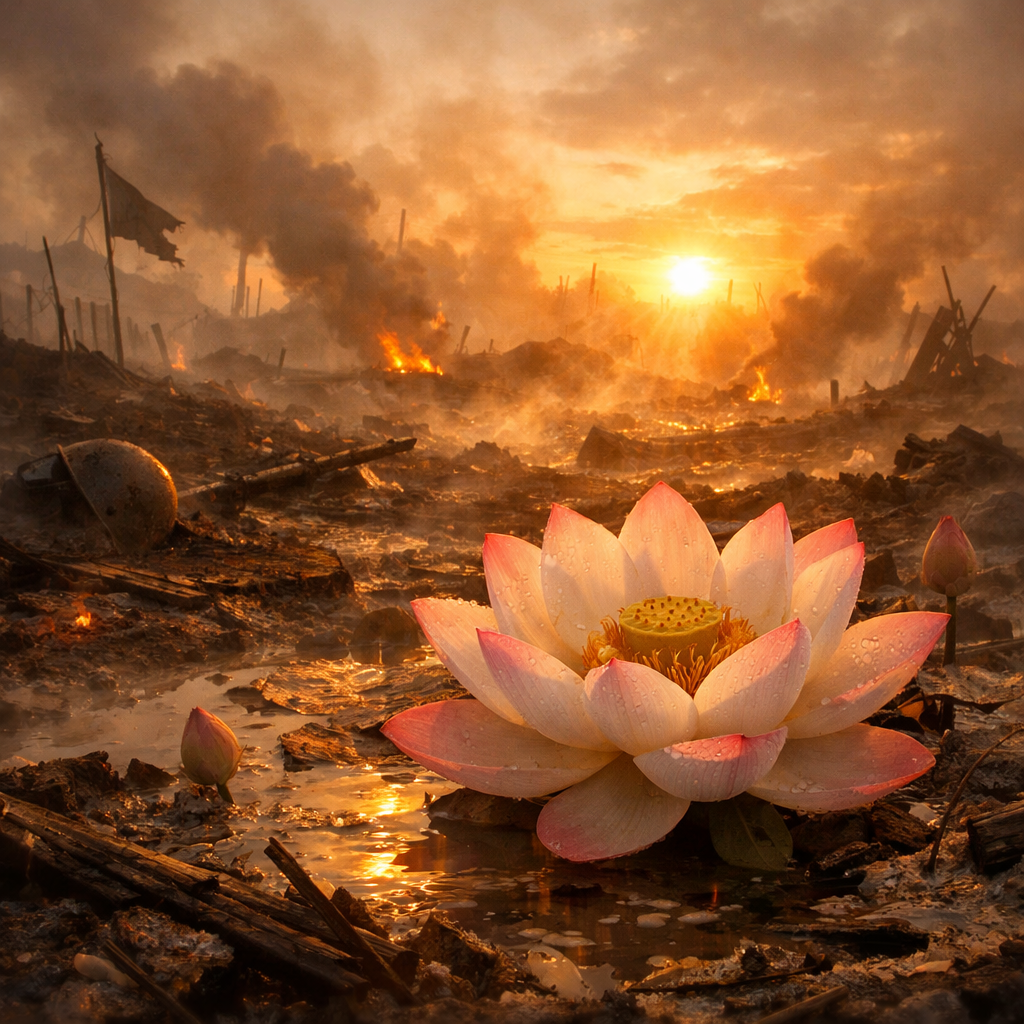
War, at its core, is organized killing. Across ethical traditions, the deliberate taking of human life, particularly at scale, raises profound moral concerns. Within Catholic social teaching, the sanctity of life is foundational: every person bears inherent dignity that cannot be overridden by expedience or power. The just war tradition, developed to constrain violence, sets strict criteria, last resort, proportionality, discrimination between combatants and noncombatants. Modern warfare, with its capacity for mass civilian harm, increasingly fails these tests. When violence becomes indiscriminate or disproportionate, it is not merely tragic; it is morally disordered.
Similarly, Buddhist ethics, grounded in the First Precept, to refrain from taking life, frames killing as a source of suffering (dukkha) that reverberates through individuals and societies. The teachings emphasize interdependence: harm inflicted on others ultimately harms oneself and the broader web of life. War, especially when fueled by anger, fear, or delusion, represents a profound breach of this ethical commitment. It conditions further violence and obscures the clarity required for compassionate action.
Against this backdrop, rhetoric that threatens the destruction of an entire people or civilization must be evaluated with moral seriousness. Statements attributed to Donald Trump suggesting such annihilation are ethically indefensible under both traditions. Catholic teaching would reject them as violations of human dignity and the moral limits on force; Buddhist teaching would see them as arising from and reinforcing unwholesome mental states, with grave karmic consequences.
Moral responsibility does not end with leaders. Ethical traditions consistently hold that those who endorse, enable, or remain willfully indifferent to grave wrongdoing share in its consequences. To support rhetoric or policies that normalize mass harm is to participate, however indirectly, in the erosion of moral boundaries that protect life.
A consistent ethical stance, therefore, requires more than opposing violence in the abstract. It calls for clear discernment, moral courage, and a refusal to legitimize threats against entire populations. In both Catholic and Buddhist frameworks, the measure is the same: actions and words must align with the preservation of life, the reduction of suffering, and the recognition of our shared humanity.
Share this:


